

When the world thinks of track and field dominance, Nairobi is naturally part of the conversation. For generations, Kenya has been globally revered as the ultimate cradle of middle and long-distance running talent. However, a new narrative is taking shape under the leadership of local sports authorities and veteran athletic networks. As reported by Magdaline Thuku, the nation is actively mulling a historic bid to host the 2032 World Masters Athletics Championships Nairobi.
This strategic initiative marks a profound evolution in how Kenya intends to leverage its rich sporting heritage. Instead of remaining a nation that primarily exports world-class athletes to compete on foreign soil, Kenya is transforming itself into a premium global destination for sports tourism and international mega-events.
Securing the 2032 hosting rights will do far more than bring 10,000 international master athletes to the capital city. It represents a multi-layered national blueprint designed to create permanent economic infrastructure, revitalize local community health programs, and challenge long-standing assumptions about aging, athleticism, and physical capability across the African continent.
Continental Pride: Ending Africa’s 35-Year Hosting Drought
To appreciate the cultural weight of the 2032 World Masters Athletics Championships Nairobi bid, one must examine the historical distribution of the tournament. Founded in 1975 to provide a global competitive platform for athletes aged 35 and older, the World Masters Athletics (WMA) circuit has grown into a massive biennial phenomenon. However, despite Africa’s undisputed contributions to global track and field history, the continent has been systematically bypassed by selectors.
Over the championship’s half-century existence, only one African city has ever successfully staged the event: Durban, South Africa, in 1997. If Kenya’s current bid is accepted by the WMA general assembly, it will officially break a 35-year continental hosting drought.
By bringing the world’s premier veteran sports tournament to East Africa, Nairobi will establish a vital precedent, proving that developing economies possess the logistical sophistication, medical networks, and infrastructural capacity required to manage massive, multi-nation sporting festivals.
The Infrastructure Blueprint: Kasarani and Nyayo as Community Hubs
A primary asset underpinning Kenya’s bid is the massive stadium modernization campaign currently funded by the national government. In past decades, international sports evaluation panels frequently expressed concern over the technical readiness of African arenas. Kenya is addressing these critiques by heavily investing in its primary sports facilities to ensure they meet strict international criteria.
The central arena for the 2032 master plan is the iconic Moi International Sports Centre (MISC), Kasarani.
As illustrated above, Kasarani is an elite, high-capacity stadium that has already proven its worth by successfully hosting high-profile tournaments such as the 2017 World Under-18 Championships and the 2021 World Under-20 Championships. To prepare for upcoming international inspection committees, the Ministry of Sports has initiated a series of critical updates:
Acoustic and Media Overhauls: Modernizing public address systems, high-speed press boxes, and digital broadcasting rooms to support real-time streaming to over 100 countries.
Tartan Track Re-engineering: Laying down specialized, high-performance synthetic tracks engineered to maximize speed while providing optimal shock absorption to protect veteran joints.
Safety and Access Controls: Upgrading electronic ticketing turnstiles and security screening barriers to ensure smooth spectator flow.
Crucially, because a WMA Championship features thousands of athletes competing across multiple age divisions simultaneously, Kenya’s bid utilizes a dual-venue model. The historic Nyayo National Stadium is undergoing a parallel renovation phase. Serving as the primary auxiliary and warm-up track, Nyayo’s proximity to Nairobi’s central hotel districts provides a highly efficient logistical setup that will prevent event delays.
Strategic Comparison: The Unique Logistical Profile of Master Athletes
Planning a global tournament for veteran athletes requires a completely different operational playbook than managing an elite junior or senior championship. Understanding these differences is vital for local businesses, hospitality providers, and transport operators aiming to capitalize on the event.
The table below highlights how the logistical, financial, and behavioral profiles of master athletes contrast sharply with standard elite sports fields.
Operational Attribute Elite Championships (e.g., World Athletics) Masters Championships (Nairobi 2032)
Typical Competitor Field Size Highly selective; roughly 1,500 to 2,000 peak-career professionals. Massive and inclusive; generally between 8,000 and 10,000 veteran participants.
Primary Funding Mechanism Fully corporate-sponsored or funded by national Olympic committees. Predominantly self-funded by the athletes themselves (registration, flights, hotels).
Travel Group Dynamics Athletes travel strictly with professional coaches and team managers. Competitors travel as a family unit, accompanied by spouses, children, and friends.
Average Length of Stay Short and focused; typically 5 to 7 days based on specific race schedules. Extended; averaging 12 to 18 days to combine competition with a personal vacation.
Economic Footprint Style Concentrated entirely within official athlete villages and high-end hotels. Highly decentralized; heavily utilizing local Airbnbs, restaurants, and retail markets.
Leadership and Collaboration: Driving the 2032 Campaign Forward
The driving force behind the 2032 World Masters Athletics Championships Nairobi bid is a collaborative partnership uniting veteran athletic advocates and top-tier government institutions. Leading this movement is Africa Masters Athletics President Dr. Rose Tata Muya, a celebrated former international hurdler and middle-distance champion who has dedicated her career to elevating veteran sports across the continent.
Dr. Muya has consistently noted that a bid of this scale can only succeed by dismantling bureaucratic silos. She has praised the seamless integration between the Ministry of Sports and Athletics Kenya (AK), who are working in unison to build an unassailable presentation for the WMA selectors.
“We are profoundly grateful for the formal green light to construct our candidature for 2032. This is a multi-agency project that brings together the financial backing of the state and the deep technical expertise of Athletics Kenya. We aren’t just presenting a list of stadiums; we are presenting a vision of athletic longevity. The infrastructure renovations we are validating today will serve as the launchpad for a golden era of sports hosting in East Africa.” — Dr. Rose Tata Muya, Africa Masters Athletics President.
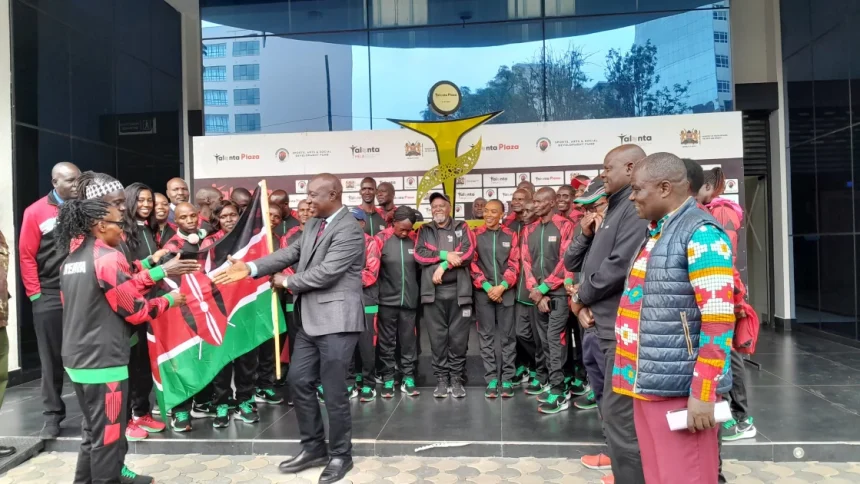
This government commitment was recently reinforced at the Talanta Hela Plaza in Nairobi. Senior sports ministry officials, including representative Evans Achoki, met directly with the Masters Athletics board to officially hand over the national flag to veteran squads ahead of international assignments. This gesture sends a clear message to the global sporting community: Kenya treats master sports as a key pillar of its national development plan and soft-power diplomacy.
The Economic Impact: Activating the Hospitality and Wildlife Safari Corridors
Because master athletes are typically self-funded working professionals, corporate executives, or affluent retirees, their economic impact cascades through multiple layers of the local economy. The Kenya Tourism Board (KTB) is already formulating specialized travel frameworks to ensure that arriving international families seamlessly transition from the track to the tourism circuit.
Revitalizing the Hospitality and Gig Economies
With thousands of international guests arriving simultaneously, Nairobi’s hospitality market will experience a major surge in demand. Beyond traditional luxury hotels, the local gig economy—particularly short-term rental hosts on platforms like Airbnb—will see unprecedented occupancy rates. This demand flows directly down to local transport services, catering companies, craft markets, and urban agricultural suppliers tasked with feeding the city’s visitors.
Boosting the Safari and Conservation Ecosystem
Masters athletes rarely leave a host nation the moment their final event concludes. Kenya’s world-renowned natural resources—including the Maasai Mara National Reserve, Amboseli, and the pristine white beaches of Diani and Watamu—are perfectly positioned to capture post-championship excursions. The revenue generated from these custom safari bookings flows directly into wildlife conservation budgets, helping protect endangered species while supporting rural economies dependent on eco-tourism.
Building a Lasting Legacy: Transforming Local Fitness Culture
While the short-term financial injections are substantial, the true value of the 2032 World Masters Athletics Championships Nairobi bid lies in its long-term social legacy. In many developing societies, competitive sport is often viewed as a pursuit exclusive to youth, with physical activity drops recorded among citizens as they enter middle age.
Hosting thousands of vibrant competitors performing at elite levels in their 50s, 70s, and even 80s will serve as a powerful public catalyst. It will challenge stereotypes surrounding aging and inspire a cultural shift toward lifelong health and wellness within Kenya.
Furthermore, the physical infrastructure left behind—including upgraded regional stadiums, localized training tracks, and specialized sports medicine centers—will remain accessible to local running clubs and school systems for decades. By investing in the 2032 WMA bid, Kenya is not just staging a two-week track meet; it is securing a healthier, more vibrant, and more active future for generations to come.