

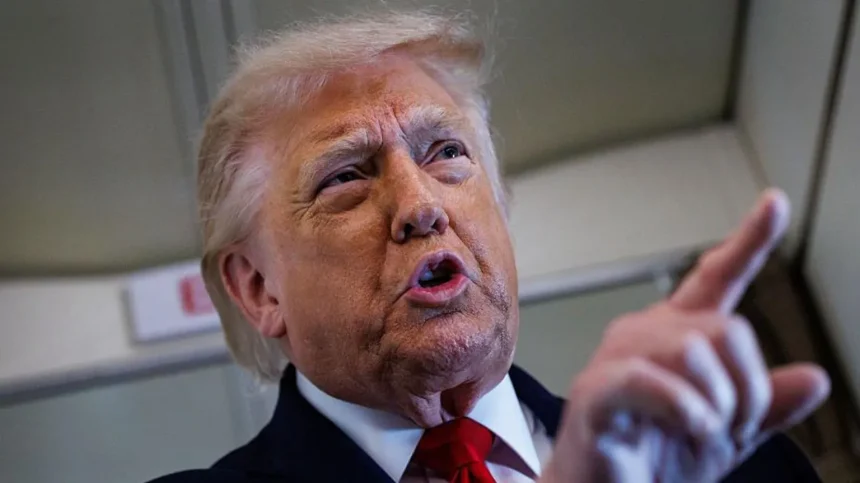
Arriving in Evian-les-Bains, France, for the G7 summit on June 15, 2026, President Donald Trump dropped another bombshell regarding the conflict that has defined the first half of the year. Speaking to reporters on the sidelines of the summit, Trump confirmed that the Memorandum of Understanding (MoU) with Tehran isn’t just an “agreement in principle”—it is a finalized, signed document.
“The deal’s all signed. And the strait is already partially opened,” Trump declared, referring to the critical Strait of Hormuz. When pressed on when the public would see the fine print, he added, “Probably pretty soon… sometime after Friday.”
While the White House remains tight-lipped, leaked reports from regional outlets and Pakistani mediators have begun to paint a picture of a high-stakes, 14-point plan that seeks to trade economic survival for military de-escalation.
The $24 Billion Question: Asset Releases and Economic Terms
According to the latest reports from the AFP and Mehr News Agency, the economic backbone of this deal is a massive infusion of liquidity for the battered Iranian economy. The memorandum reportedly stipulates the release of $24 billion in frozen Iranian assets over a 60-day negotiation period.
Perhaps the most controversial detail is the “pre-payment” clause: $12 billion of that amount must be made available to Tehran before formal negotiations even begin.
Inside the Reported 14-Point Memorandum
Point Category Projected Terms
Asset Liquidity $12B released immediately; $12B more during the 60-day “technical window.”
Maritime Access Immediate removal of the US Navy blockade; “toll-free” passage through Hormuz.
Nuclear Waste US to retrieve and destroy specific nuclear waste stockpiles from Iranian sites.
Ceasefire Fronts Permanent termination of military operations in Iran, Iraq, and Lebanon.
Regional Security Joint US-Qatari-Turkish oversight of “neutral zones” along the border.
The “Netanyahu Defiance”: Will Israel Derail the Peace?
While the US and Iran seem to be moving toward a signature in Geneva this Friday, June 19, a massive obstacle remains: Israel.
Israeli Prime Minister Benjamin Netanyahu has reportedly told President Trump in a private call that Israel does not consider itself bound by the Lebanon-related clauses of the deal. Citing the need to eliminate Hezbollah’s “command centers,” Israel launched fresh strikes on Beirut’s southern suburbs just hours after the deal was announced.
Trump’s response on Truth Social was direct, stating that “all sides should stand down” and that the strikes on Beirut “should not have happened.” This creates a rare public rift between the two allies, with Israel refusing to withdraw troops from southern Lebanon—a move that Iran warns could “humiliate” the entire peace process.
The G7 Summit and the “Geneva Hour”
The signing ceremony is scheduled to take place in Geneva, Switzerland, just an hour’s drive from where G7 leaders are currently meeting in the French Alps. Vice President J.D. Vance has confirmed his attendance, though he hinted that President Trump himself might make a “surprise” appearance to sign the document personally.
French President Emmanuel Macron has already signaled that European partners are ready to deploy naval forces to help secure the Strait of Hormuz once the US blockade is officially lifted. This international “guarantor” role is seen as essential to preventing a return to hostilities if a stray drone or rocket hits a commercial tanker.
Strategic Analysis: Success or Surrender?
The 2026 war has been brutal. While the Trump administration claims it has “decimated” Iranian military infrastructure and removed key leadership figures, critics point out that the regime remains in power and may be more determined than ever to seek a nuclear deterrent.
Market analysts are also cautious. Although oil futures dipped on news of the “partial opening” of the Strait, energy experts at the Atlantic Council warn that it will take months for production and export infrastructure in the Gulf to return to pre-war levels.
Expert Take: “The war was a tactical success but a strategic enigma. By bringing Iran to the table with a $24 billion incentive, the US is betting that economic stability will prevent Iran from crossing the nuclear threshold. It’s a multi-billion dollar gamble on the eve of the US midterms.”
Conclusion: A Tense Countdown to Friday
As the world’s “Ships of the World” begin to warm their engines, the eyes of every diplomat are on Geneva. Will the 14-point plan hold, or will regional “spoilers” like the ongoing Israel-Hezbollah clashes tear the memorandum apart before the ink is dry?
One thing is certain: The “Pretty Soon” release of the text will be the most anticipated document in modern foreign policy.
Deepen your coverage of the Geneva Summit:
The $12 Billion Pre-Payment: A Political Risk?
Israel’s ‘Spoiler’ Strategy in Lebanon
Tracking the Strait of Hormuz Reopening