
When we picture United Nations peacekeeping missions, our minds immediately fly to images of soldiers in blue helmets, armored personnel carriers, and strategic defensive perimeters. But there is a massive, highly dangerous frontline that rarely gets media coverage: the world of civilian peacekeepers.
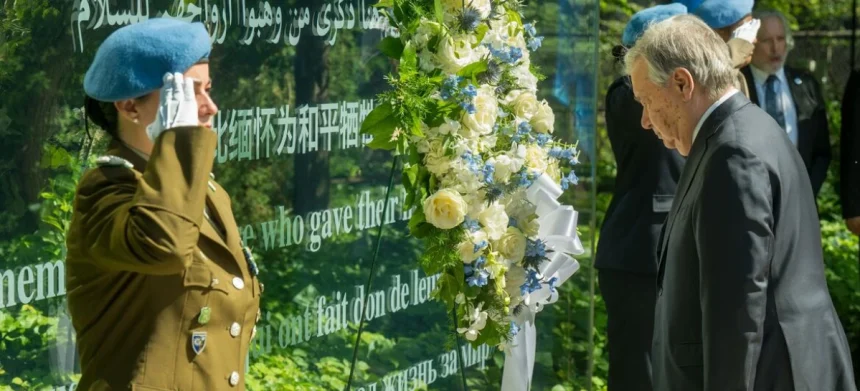
The recent posthumous honoring of two Kenyan heroes with the prestigious Dag Hammarskjöld Medal brought this distinct duality into sharp focus. While Major Paul Ndungu Njoroge represented Kenya’s elite military bravery in the Central African Republic (MINUSCA), Ms. Alice Wanjiru Chege served—and ultimately lost her life—in a civilian capacity within the Democratic Republic of the Congo (MONUSCO).
To truly understand the modern landscape of global stability, we have to look closely at the unarmed professionals who walk straight into conflict zones with nothing but a clipboard, expertise, and a dedication to human rights.
Civilian and military personnel work side-by-side on the frontlines of UN peace operations.. Source: Daniel Morel / REUTERS
The Invisible Roles That Keep the Peace
Civilian peacekeepers do not engage in combat, yet they operate in the exact same volatile environments as their armed counterparts. They are the structural architects of nations trying to rebuild from the ashes of civil war. Their daily responsibilities typically span across several core pillars:
Human Rights Monitoring: Documenting violations, protecting vulnerable populations, and ensuring local authorities adhere to international law.
Political Affairs & Mediation: Working closely with local community leaders, rebel factions, and government officials to keep dialogue alive when weapons are quiet.
Logistics & Engineering: Managing complex supply chains, field hospitals, and communication lines that keep entire missions running.
Electoral Assistance: Organizing and securing transparent voting frameworks so war-torn nations can successfully transition into democratic governance.
Unarmed in Harm’s Way
The reality of modern conflict is that lines are blurred. Armed groups frequently target UN installations, logistics convoys, and administrative offices. For civilian personnel, this creates a unique type of vulnerability. They live and work alongside military troops, but they do not carry weapons for personal defense.
According to UN records, hundreds of civilian staff members have paid the ultimate price since global peacekeeping operations began in 1948, proving that peace building is every bit as perilous as peacekeeping.
When local factions fracture or ceasefires collapse, civilian staff are often caught in the crossfire while coordinating refugee relief or conducting field investigations. It requires an extraordinary depth of personal conviction to step into a volatile region like eastern DRC or the Central African Republic without a rifle, relying entirely on the protection of the blue flag and the respect of international law.
Kenya’s Expanding Footprint
Kenya’s recognition as the 27th largest contributor to UN peacekeeping operations highlights more than just tactical military deployment. It reflects a comprehensive diplomatic strategy. Out of the 440 Kenyan personnel actively deployed across seven global hot spots—including South Sudan, Lebanon, and Abyei—the presence of specialized civilian experts and 72 uniformed women highlights a shift toward more inclusive, multifaceted peace operations.
The sacrifice of Alice Wanjiru Chege serves as a powerful reminder to the world: global stability isn’t achieved solely through military force. True, lasting peace is built brick by brick by doctors, administrators, legal experts, and community coordinators who brave the world’s darkest hours to turn on the lights.