

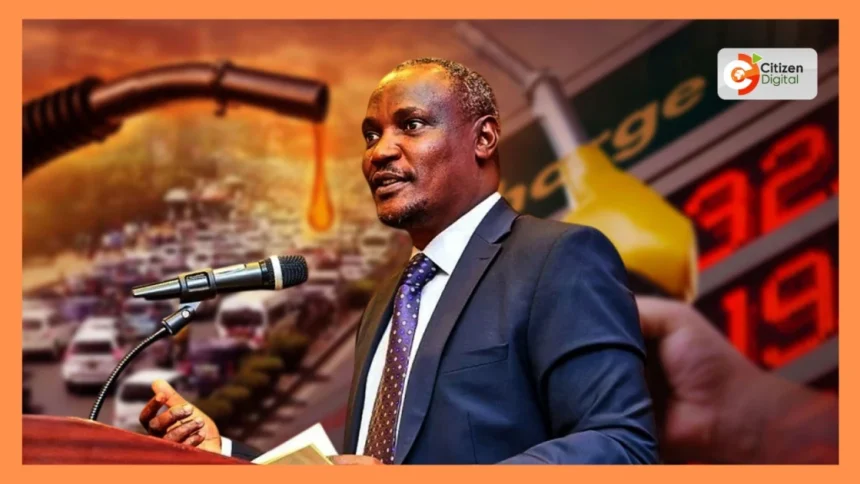
For global frontier market investors, sovereign credit rating agencies, and international development lenders, June 11, 2026, stands as a critical day of reckoning for the East African region. In accordance with regional integration protocols, the finance ministers of Kenya, Uganda, and Tanzania delivered their 2026/2027 national budget presentations concurrently.
Internazionale
However, the synchronized readings took place under a dark cloud of geopolitical and macroeconomic vulnerabilities.
With the ongoing military escalation in the Middle East driving up global crude oil prices and disrupting critical maritime supply chains, the African Development Bank (AfDB) took the pre-emptive step of slashing East Africa’s 2026 real GDP growth forecast by a significant half a percentage point. For international bondholders, the core question is clear: Can these regional economies defend their fiscal targets from external inflation shocks while avoiding a sovereign debt default?
CNBC Africa
+ 1
The Goldman Sachs Assessment: Kenya’s Credibility Gap
The primary focus of international market analysts remains on Kenya, the economic anchor of the region. Facing high debt-repayment obligations, a temporary reduction in petroleum taxes designed to prevent public protests, and a depreciating currency, Finance Minister John Mbadi is walking a tightrope.
CNBC Africa
While the Kenyan National Treasury formally projected a narrowed budget deficit of 5.4% of GDP for the 2026/27 fiscal year (down from the current year’s estimated 6.4%), Wall Street remains cautious.
CNBC Africa
KENYA’S REVENUE PERFORMANCE GAP
Historical Reality Treasury Target (FY 2026/27)
┌───────────────────────┐ ┌────────────────────────┐
│ Persistent deficits, │ VS. │ Deficit target set │
│ underperformed goals, │ │ at 5.4% via aggressive │
│ and rising interest. │ │ domestic tax audits. │
└──────────┬────────────┘ └───────────┬____________┘
│ │
└─────────────────┬──────────────────┘
▼
[GOLDMAN SACHS ANALYSIS]
“Insufficient to stabilize debt…
Markets require genuine revenue measures.”
In a direct assessment of Kenya’s financial plan, Andrew Matheny, senior economist at Goldman Sachs, highlighted the structural risks built into the Treasury’s assumptions:
Internazionale
“Treasury has consistently underperformed budget targets in recent years and the fiscal balance has remained in a primary deficit, insufficient to stabilize public debt and restore market confidence. Markets will look for evidence of a more credible fiscal path forward, consisting of either spending cuts or genuine revenue measures that narrow the deficit.”
CNBC Africa
+ 1
With households already heavily squeezed by inflation and state agencies complaining of delayed fund releases, relying on aggressive domestic tax enforcement to close the 5.4% deficit represents a significant political and economic gamble.
Internazionale
Tanzania’s High-Growth Strategy: Launching “Dira 2050”
While Kenya focuses heavily on deficit reduction, Tanzania is positioning itself as a growth-driven alternative for foreign capital. Finance Minister Ambassador Khamis Mussa Omar outlined a TSh.62.3 trillion (approximately $24 billion) budget framework, marking the official launch of the Tanzania Development Vision 2050 (Dira 2050).
The Star
Unlike its neighbors, Dar es Salaam is leaning heavily into self-reliance to maintain policy stability:
Domestic Revenue Over Foreign Debt: A massive 75% (TSh.46.8 trillion) of the entire $24 billion budget framework will be financed through internal domestic revenue collections, minimizing exposure to unpredictable international bond markets.
Xinhua
Strategic Infrastructure Spend: The budget prioritizes massive capital allocations for industrial processing plants and logistics networks, aiming to utilize the Port of Dar es Salaam to capture regional transit trade as global supply chains shift.
Uganda’s Import Insulation Strategy
In Kampala, Uganda’s financial planners are confronting a direct logistics crisis. Because the landlocked nation relies completely on the ports of its regional neighbors, the rise in international maritime insurance surcharges—triggered by the Middle East war—has added significant pressure to its import bill.
Uganda’s budget response shifts capital toward domestic infrastructure resilience and localized energy projects. However, the country’s macro outlook remains highly vulnerable to currency depreciation against the US Dollar, which threatens to drive up the local-currency cost of servicing its existing external debts.
Country Economic Metrics Projected FY 2026/27 Budget Size Primary Financing Strategy
Kenya ~Ksh.3.9 Trillion Narrowing deficit to 5.4% through strict tax compliance.
Tanzania TSh.62.3 Trillion (~$24 Billion) 75% funded via domestic revenue to launch Vision 2050.
Uganda ~USh.52 Trillion Reallocating funds to logistics insulation and energy assets.
The Supranational Layer: The Donor Funding Challenge
Compounding the pressure on national budgets is the financial outlook of the East African Community (EAC) regional body itself. The East African Legislative Assembly (EALA) recently passed a $110.86 million budget for the EAC regional bloc for the 2026/27 financial year.
Burundi Times
EAC BLOC REGIONAL BUDGET FUNDING MIX
Partner State Contributions [57%] │██████████████████████████████
External Development Donors [41%] │██████████████████████
Institutional Reserves [2%] │█
└─────────────────────────────
0% 20% 40% 60% 80% 100%
An analysis of the regional bloc’s funding structure reveals a persistent structural challenge: external development partners are expected to finance 41% ($46.1 million) of the regional budget.
Burundi Times
With international donor nations currently reallocating their financial resources toward security frameworks and domestic inflation management, any delay in these donor disbursements could stall regional programs tied to cross-border health tracking, climate adaptation, and trade digitization.
Investor Outlook: What Happens Next?
For international asset managers, the coming weeks will determine whether East African sovereign bonds represent a viable investment or a high-risk gamble.
If Kenya’s John Mbadi can demonstrate genuine fiscal restraint without triggering civic unrest, and if Tanzania successfully executes the infrastructure targets of Dira 2050, the region may preserve its macroeconomic stability. However, as long as global energy prices remain vulnerable to geopolitical escalations, East Africa’s path to growth will depend entirely on absolute transparency and disciplined resource allocation.
External Macroeconomic Reference
To view a comprehensive televised analysis of the budget statements, including live updates from financial analysts in Kampala and Nairobi regarding currency volatility and bond market performance, watch this NTV Uganda Regional Budget Briefing. This broadcast outlines how institutional investors are reallocating capital across the East African Community in response to these new fiscal laws.