
The newly signed interim peace agreement between Washington and Tehran has faced a severe bottleneck just hours before technical negotiations were set to open in Switzerland. In a dramatic escalation that has sent waves through global energy markets, Iran’s Joint Military Command announced it has officially closed the strategic Strait of Hormuz to all international shipping.
The Jerusalem Post
Tehran claims the closure is a direct response to a “clear breach of commitments” by the United States, pointing to ongoing Israeli airstrikes in southern Lebanon that have killed dozens despite a regional ceasefire clause built into the initial peace framework.
PBS
Responding with immediate economic brinkmanship, U.S. President Donald Trump has threatened to hit back by imposing massive, permanent “American Tolls” on any vessel utilizing the waterway if a comprehensive treaty is not finalized within the standard 60-day window.
PBS
The Backstory: Why the Lebanon Front Broke the Deal
The foundation of the U.S.-Iran Memorandum of Understanding (MoU) signed earlier this week was an immediate cessation of hostilities across all proxy fronts—most notably the active warzone in southern Lebanon between Israel and the Iran-backed militant group Hezbollah.
However, because neither Israel nor Hezbollah are formal signatories to the bilateral U.S.-Iran agreement, local enforcement has proven nearly impossible:
India Today
The Deadly Incursion: On Saturday, heavy Israeli airstrikes battered the city of Nabatiyeh and surrounding Lebanese villages, killing at least 16 people, including children.
PBS
The Proxy Pushback: A senior Hezbollah official confirmed to the press that the group has targeted Israeli military positions with over 50 projectiles, declaring they will not allow Israeli forces “freedom of movement” on occupied Lebanese soil.
The Straits Times
Iran’s Retaliation: Angered by what they term U.S. complicity in failing to restrain Israel, the Islamic Revolutionary Guard Corps (IRGC) declared that the flow of Middle Eastern energy will remain frozen until Israel publicly commits to a comprehensive withdrawal from Lebanon.
PBS
Trump’s Pivot: The “Guardian Angel” Toll Threat
While the initial 14-point interim agreement explicitly guaranteed toll-free travel through the Strait of Hormuz for the next 60 days, Donald Trump has already moved to fundamentally alter the economic terms of the deal.
PBS
Taking to social media, Trump declared that if Iran fails to sign a binding, permanent nuclear and security treaty within the two-month deadline, the United States military will unilaterally implement a maritime toll system. Trump framed the proposed fee as a mandatory invoice for:
PBS
“…services rendered as the Guardian Angel to the countries of the Middle East who rely on safe passage through the gulf.”
PBS
The threat introduces an entirely new, unpredictable layer to the negotiations, signaling that Washington is ready to structurally monetize its naval presence in the Persian Gulf if diplomacy falls apart.
PBS
Technical War of Words: Is the Strait Actually Closed?
As diplomats converged on the Swiss venue, a starkly conflicting narrative emerged regarding the physical reality on the water. While Iranian state media broadcasted images of naval alerts warning merchant vessels to stay away, U.S. Central Command (CENTCOM) flatly dismissed the blockade as a propaganda stunt.
India Today
+ 1
Metric / Stance Iranian Military Claim U.S. Central Command Reality
Status of Waterway Officially Blockaded & Closed Completely Open & Fully Operational
Maritime Control Sovereignty enforced by IRGC Navy Monitored and secured by U.S. Navy
Daily Commercial Volume Zero merchant ships allowed 55 ships safely transited (17M+ barrels of oil)
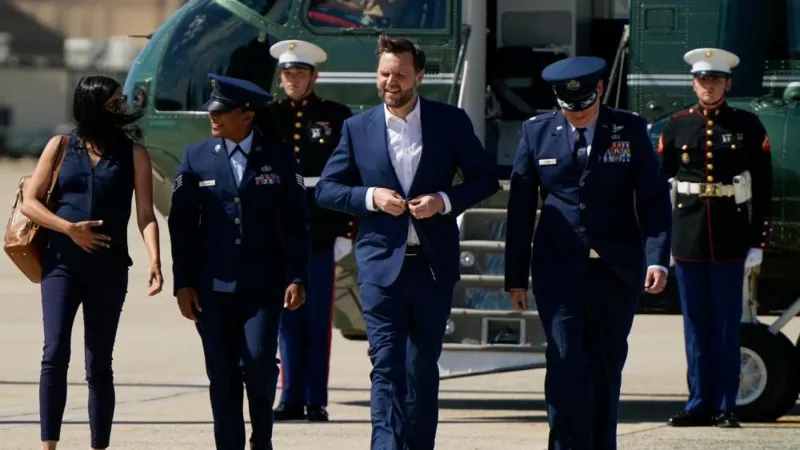
U.S. Vice President JD Vance, speaking shortly after landing at Emmen Air Base in Switzerland, reinforced the military’s assessment, stating he has seen “zero actionable evidence” that any physical blockades or minefields have been re-established in the channel.
The Straits Times
What Happens Next in Switzerland?
Despite the aggressive posturing, high-level delegations have officially kicked off closed-door sessions. The Iranian team, led by chief negotiator and parliamentary speaker Mohammad Bagher Ghalibaf alongside Foreign Minister Abbas Araghchi, will sit down across from the U.S. delegation, which features Vice President JD Vance, special envoy Steve Witkoff, and presidential adviser Jared Kushner.
India Today
With Pakistan’s Prime Minister Shehbaz Sharif and Chief of Army Staff Field Marshal Asim Munir acting as the direct buffer between the two factions, the immediate focus of day one has shifted from nuclear de-escalation to an emergency security framework for Lebanon. If the Swiss mediators cannot successfully salvage the Lebanon ceasefire, the interim peace deal may collapse before it ever gets a chance to be written into law.